

From Hentai Panel to Hoodie: How Ahegao Became a Mainstream Aesthetic
A facial expression born in adult manga escaped its genre, conquered fashion and memes, and ended up a distinct niche in the creator economy. Here’s the strange journey.
Ahegao started as a drawing shortcut. In adult manga, artists needed a way to signal overwhelming sensation instantly — eyes rolled back, tongue lolling, cheeks flushed — and they found one. The exaggeration was the entire point. Decades later, that same face turns up on hoodies, TikTok poses and the front of a booming online creator niche.
The word ahegao (アヘ顔, roughly “ecstatic face”) describes a visual convention, not a person and not an act — and that, more than anything, is why it traveled. A shorthand for “sensation so intense you’ve lost control of your expression” turned out to be endlessly remixable, ironic and, eventually, commercial. Its path from niche panel to mainstream aesthetic is a small case study in how internet culture turns a taboo into a trend.
A drawing shortcut with a long history
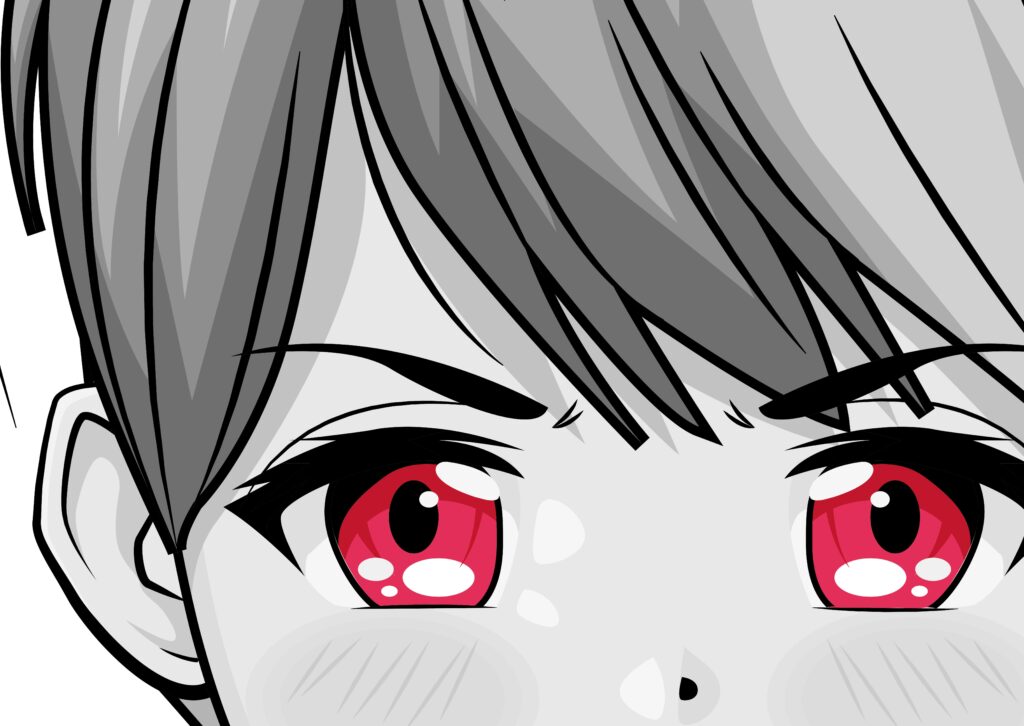
The expression has deep roots in Japanese illustrated media. In The History of Hentai Manga, eromanga scholar Kimi Rito describes ahegao as a deliberate set of elements — a wide-open mouth, a dangling tongue, eyes rolled so far back the pupils vanish — chosen to heighten emotional symbolism. It is a convention, a piece of visual grammar, refined over decades by artists of both genders.
For most of that history it stayed inside the genre. Then the internet got hold of it. As hentai spread on Western forums over the last decade, the face spread with it, and something curious happened: it detached from its origin. As one culture writer noted, ahegao became a symbol of extreme pleasure that could stand in for the enjoyment of almost anything, not just sex, MEL Magazine reported. Once a symbol floats free of its context, it can go anywhere.
The escape into fashion and memes
And it did. The tipping point was visual: around 2015, a collage of ahegao faces by the artist Hirame inspired the now-infamous “ahegao hoodie,” a garment plastered with distorted anime expressions. By September 2016 the look had jumped to Instagram as the “Ahegao Challenge,” and by 2018 the internet personality Belle Delphine had cemented it as a staple of the Western “e-girl” aesthetic, as meme historians have documented.
At that point ahegao stopped being an anime in-joke and became a fashion provocation. Wearing the hoodie in public was the meme — a dare, a conversation starter, a deliberate test of where the social line sat. The imagery’s shock value did the work; you didn’t even have to explain it.
The backlash came with it
Mainstreaming a piece of pornographic iconography did not go unchallenged. In January 2020, several US anime conventions banned ahegao clothing on their grounds, refusing entry to anyone wearing it, per the same meme archives.
The deeper criticism was cultural. As the trope spread — increasingly worn and posted by non-Asian creators — critics argued it fetishized and stereotyped East Asian women, flattening a complex expression into an exoticized cliché, and pointed to the misogynistic strands of its hentai origins. That debate never fully resolved; the aesthetic’s popularity didn’t answer the objection so much as talk over it. It’s worth naming plainly rather than waving away: the same exaggeration that makes ahegao instantly readable is exactly what makes the critique land.
From meme to monetized niche
The last stop on the journey is the creator economy, and it’s where the trope found a business model. What began as a manga convention is now a distinct, self-contained category: creators build entire personas around anime, cosplay and ahegao aesthetics, and audiences seek them out specifically.
On a platform with no internal search, a niche only exists to fans if something indexes it — which is why anime-adjacent categories get catalogued directly. OnlyGuider keeps a dedicated ahegao category precisely because the demand is specific and searchable enough to warrant its own listing. The economics behind that are real: US fans spent an estimated $2.63 billion on the platform in 2025, AOL reported, citing OnlyGuider, and the money flows through persona-driven, direct interaction — messages account for 69.74% of all creator revenue, per The Globe and Mail, citing the same source. A character-based aesthetic is built for exactly that kind of in-persona exchange. Ahegao didn’t just enter pop culture. It became a product line.
The caveats
Ahegao’s history lives mostly in meme archives and fan scholarship rather than peer-reviewed record, so specific “firsts” and dates are contested and should be read as the best-attested version, not gospel. The fetishization critique is genuine and unsettled — mainstreaming an image doesn’t neutralize what people find objectionable in it. And OnlyGuider’s spending figures are modelled estimates, not audited totals. Treat the arc as a well-documented cultural trajectory, not a precise chronicle.