

From Fan to Creator: The New Era of AI Hentai
For years, being a fan of hentai meant browsing existing catalogs, waiting for new releases, or commissioning artists whose queues stretched for months. That relationship has shifted. Fans now have tools that let them shape the content itself, choosing character details, poses, settings, and art styles without needing years of drawing practice. This shift from passive consumption to active creation is one of the more interesting cultural changes happening quietly within niche digital art communities.
The driving force behind this change is generative AI, specifically image models trained to understand and reproduce the visual language of anime and hentai art. What used to require a skilled illustrator and considerable time now takes a written description and a few seconds of processing. The result is a growing population of former fans who now describe themselves as creators, even if they have never picked up a stylus or opened an illustration program.
Understanding What Makes AI Hentai Generation Possible
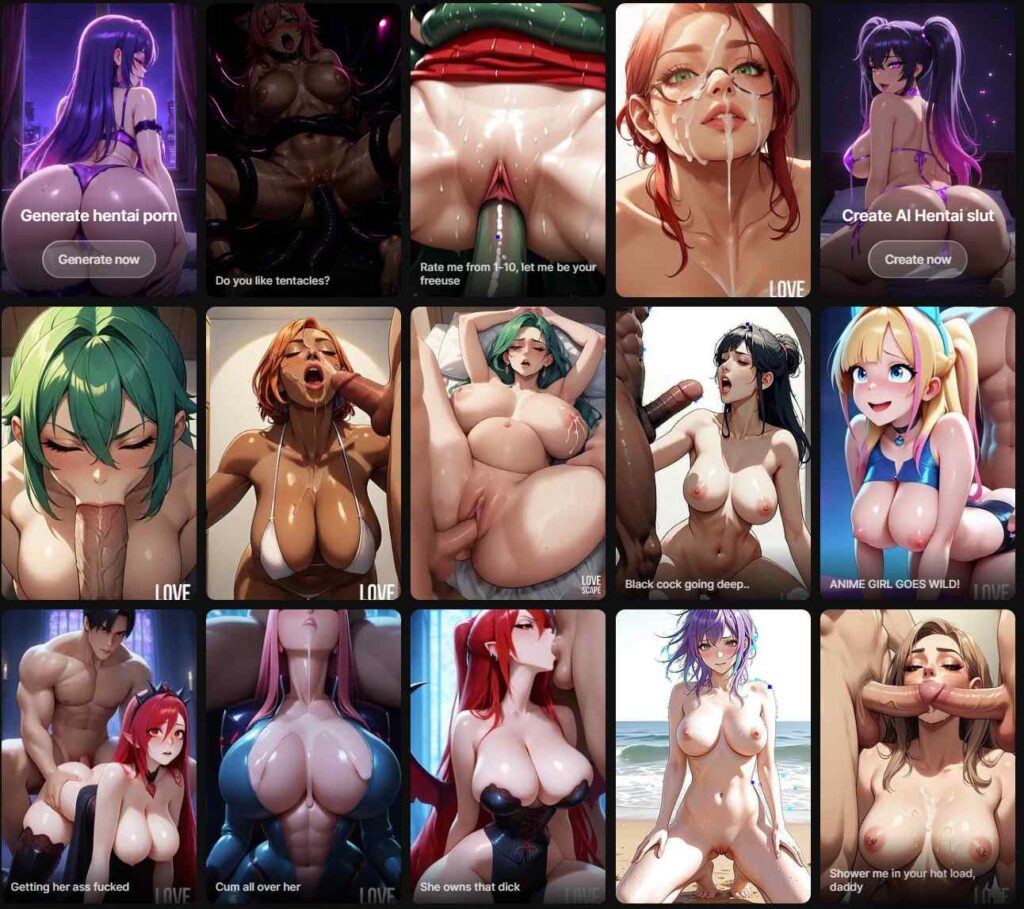
Lovescape is one of the platforms leading this shift, offering an ai hentai generator built on diffusion models, a type of machine learning system trained on massive collections of images paired with text descriptions. During training, the model learns patterns: how a certain art style renders hair, how shading works on skin, how specific poses are typically drawn. When a user types a prompt, the model generates an image by gradually refining random noise into something that matches the description, guided by everything it learned during training.
This process importantly differs from earlier computer-generated art. Older digital art tools required the user to manually place every line, color, and shadow. Diffusion-based generators instead interpret intent. A user might write a description of a character’s hairstyle, outfit, and expression, and the system produces a finished image based on statistical patterns rather than explicit instructions for every pixel. This makes the technology accessible to people with no drawing background at all.
The quality of output depends heavily on how the model was trained and fine-tuned. General-purpose image generators often struggle with anime-style proportions or specific hentai conventions, since their training data leans toward photorealism or broader art categories. Specialized generators, by contrast, are trained or fine-tuned specifically on anime and hentai datasets, which is why dedicated platforms tend to produce more convincing results than generic AI art tools repurposed for the genre.
Why Fans Are Choosing to Become Creators
Cost and access explain part of this shift. Commissioning a human artist for detailed hentai art can run anywhere from tens to hundreds of dollars per piece, and turnaround times vary widely depending on the artist’s workload. An AI hentai generator removes both barriers, letting someone produce dozens of variations in the time it once took to receive a single commission quote.
Creative control plays an equally large role. Fans often have very specific preferences about character appearance, scenario, or art style that existing content simply does not satisfy. Rather than searching endlessly through tags and categories hoping to stumble on the right combination, they can now describe exactly what they want and iterate until the result matches their vision. This kind of granular customization was previously reserved for those willing to pay a premium for bespoke commissions.
There is also a personal satisfaction component that shouldn’t be underestimated. Many users report that experimenting with prompts and refining results feels genuinely creative, even without traditional artistic skill. Choosing composition, adjusting details, and guiding the AI toward a specific outcome gives users a sense of authorship that pure browsing never provided.
How an AI Hentai Maker Actually Works in Practice
Using an ai hentai maker typically starts with a text prompt describing the desired character and scene. Users specify details like hair color, body type, clothing, pose, and background, often using a combination of natural language and specific style tags that the model recognizes. Many platforms also let users adjust technical parameters such as image resolution, the number of generation steps, or how closely the output should follow the prompt versus introducing its own variation.
Most tools also support image-to-image generation, where a user uploads a reference picture and the AI modifies it according to new instructions. This is particularly useful for fans who want to reimagine an existing character in a different outfit or setting without starting from a blank prompt. Some platforms further allow inpainting, where specific regions of an image can be regenerated while the rest stays untouched, giving creators fine control over small details without redoing the whole piece.
The Role of an AI Hentai Image Generator in Shaping Art Styles
Different generators are built around different visual traditions. Some specialize in styles reminiscent of classic anime cel-shading, while others lean toward more painterly or semi-realistic rendering. An ai hentai image generator’s underlying training data determines which styles it can produce convincingly, and users often gravitate toward specific platforms because of the aesthetic they favor.
This has led to a kind of stylistic diversification within the community. Where fan art communities once clustered around a handful of dominant visual trends set by popular human artists, AI tools now let smaller groups of users develop and share their own preferred styles through custom prompts and settings. A niche aesthetic that might never have found a dedicated human artist can now be explored freely by anyone with access to the right generator.
Practical Considerations Before Using These Tools
Not every platform handles content moderation, data privacy, or age verification the same way, so it’s worth checking a service’s policies before relying on it regularly. Some generators store prompt history or generated images on their servers, which matters for users concerned about privacy. Others process everything locally or delete data after a session ends.
Output consistency also varies between tools, and users sometimes need to experiment with several generators before finding one that reliably produces the style and level of detail they want. Reading community discussions or trying free trial tiers before committing to a paid subscription tends to save both time and money in the long run.
A Shift in Who Gets to Shape Fan Content
What started as a niche technical curiosity has become a genuine change in how fan communities relate to the content they enjoy. The line between audience and artist has blurred considerably, and that shift shows no sign of reversing as the underlying technology continues to improve. Fans who once waited for someone else to create what they wanted can now build it themselves, and that simple change in agency is reshaping the culture around hentai art from the ground up.